Watercolor Fresh Basil Clipart Set Review
As a professional embroidery designer and product reviewer, I approach every new asset with a specific question: will this actually translate to thread? When evaluating the Watercolor Fresh Basil Clipart Set for real-world application, my focus shifts immediately from digital aesthetics to stitch performance. This collection falls under the category of Illustrations, which often presents unique challenges for machine embroidery design. While the soft, painterly edges look stunning on a screen, they require careful interpretation when converting into a tangible embroidered patch or custom apparel piece. My initial impression is that this set captures an organic, garden-fresh mood that is highly desirable for current market trends, but it demands respect during the digitizing and production phases to maintain its delicate character.
Translating Painted Edges to Stitch Density
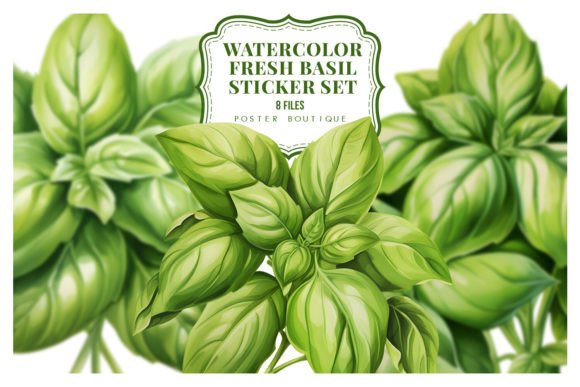
The primary appeal of the Watercolor Fresh Basil Clipart Set lies in its irregular, soft boundaries. Unlike traditional vector art with hard lines, watercolor illustrations rely on color blending and transparency. For an embroidery project, this means we cannot simply rely on standard satin stitch outlines to define the shape. In my assessment, this design works best when treated as a complex fill stitch composition rather than a simple outline-and-fill motif. The varying opacity in the original artwork suggests areas where stitch density should be lighter to mimic the wash of paint, and denser where the pigment pools.
When planning a sweatshirt embroidery or tote bag design using this basil imagery, I recommend avoiding heavy underlay in the "washed out" areas of the illustration. Too much stabilizer or dense underlay will flatten the watercolor effect, making the finished product look stiff and industrial rather than artistic. Instead, utilize running stitch details to suggest texture without adding bulk. This approach preserves the handmade product feel that customers associate with botanical embroidery. If you are creating a digital embroidery file from these illustrations, ensure your software allows for variable density mapping to capture the nuance of the basil leaves.
Real-World Application: The Custom Kitchen Towel Test
To truly evaluate this asset, I mentally applied it to a recent client request for high-end kitchen linens. The goal was a personalized gift set featuring fresh herbs. Using the Watercolor Fresh Basil Clipart Set for a tea towel requires navigating the textured fabric surface. Linen and terry cloth can swallow fine details, so the scale of the basil elements becomes critical. In this scenario, I would avoid shrinking the design below 3 inches in width. At smaller sizes, the subtle color gradients of the watercolor style get lost in the weave of the fabric.
For this specific embroidery project, I envision placing the basil cluster in the bottom right corner with ample negative space. This layout respects the organic nature of the illustration and prevents the design from feeling crowded. When stitching on absorbent fabrics, using a water-soluble topping is non-negotiable to keep the stitches visible. Without it, the delicate shading of the basil leaves will sink into the towel, diminishing the visual impact. This real-life test confirms that while the design is versatile, it thrives most on smooth, tightly woven cottons or canvas tote bags where the thread can sit cleanly on top of the substrate.
Fabric Compatibility and Stabilizer Strategy
Not all garments welcome watercolor-style embroidery equally. When considering custom apparel like lightweight summer tees or baby clothes, caution is necessary. The Watercolor Fresh Basil Clipart Set implies a level of coverage that might be too heavy for thin jersey knits. If you intend to use this for baby embroidery, select only the smallest, least dense elements of the set, or significantly reduce the stitch count during digitization. Heavy designs on stretchy fabric lead to puckering and distortion, ruining both the garment and the reputation of your craft business.
Conversely, this design set shines on structured items. An embroidered patch made from this basil artwork would be exceptional because patches allow for higher stitch density and robust stabilizer backing. Similarly, caps and hats provide a firm foundation, though the curved surface requires careful hooping to prevent registration issues with multi-color fills. Always test your chosen stabilizer combination on scrap fabric first. For dark fabrics, remember that watercolor effects often rely on white or light backgrounds to show transparency. On black denim, you may need to add a white underlay base, which changes the hand-feel of the embroidery. Check how the thread colors interact with the fabric background before committing to a full production run.
Commercial Viability for Etsy Sellers and Makers
For Etsy sellers and small shop owners, the Watercolor Fresh Basil Clipart Set offers strong commercial potential, provided it is executed professionally. Buyers today can distinguish between generic clipart and thoughtful, artisanal embroidery. To maximize buyer engagement, your listing photos must accurately represent the texture of the stitches. Use printable mockups that reflect the actual dimensions and placement of the design, but always include at least one photo of the physical stitched sample. This builds customer trust and manages expectations regarding the "watercolor" look, which varies between digital preview and threaded reality.
If you are selling finished products, consider how this design fits into your brand consistency. Botanical themes are evergreen, but they must align with your existing aesthetic. Pairing this basil set with minimalist typography creates a modern farmhouse vibe suitable for holiday gifts or wedding favors. However, ensure you verify the licensing terms before incorporating these illustrations into commercial embroidery projects or reselling digital assets. Understanding whether you have rights for physical products versus digital files protects your business. Additionally, when creating listings, highlight the specific applications—such as apron embroidery or nursery decor—to help customers visualize the end use.
Technical Considerations for Digitizing and Production
Before loading this design into your machine, perform a thorough technical audit. Since specific file formats and hoop sizes are not universally standardized for this set, you must confirm compatibility with your equipment. Review the stitch density settings; watercolor styles often benefit from slightly lower density to prevent thread buildup. Inspect small details like leaf veins or stem tips. If they are thinner than 1mm, convert them to running stitches or remove them entirely to prevent needle breaks and thread shredding.
- Contrast Check: Test thread colors against both light and dark backgrounds to ensure the watercolor shading remains visible.
- Stabilizer Selection: Match stabilizer weight to the fabric; use cutaway for knits and tear-away for wovens.
- Scale Verification: Confirm the minimum viable size for the design to retain detail without excessive density.
- License Review: Validate usage rights for both physical sales and digital product previews.
- Mockup Accuracy: Ensure digital previews reflect realistic stitch texture, not just flat vector overlays.
Ultimately, the Watercolor Fresh Basil Clipart Set is a valuable asset for makers who understand the translation process from pixel to stitch. It offers a beautiful, organic aesthetic that elevates personalized gifts and boutique merchandise above standard fare. By approaching it with technical mindfulness—respecting fabric limitations, optimizing stitch types, and validating commercial terms—you can transform these lovely illustrations into profitable, high-quality embroidered goods. Whether you are crafting a signature tote bag design or expanding your digital product catalog, success lies in balancing artistic vision with mechanical precision. Always prioritize a test stitch-out; no amount of digital planning replaces seeing the thread interact with the fabric in real time.