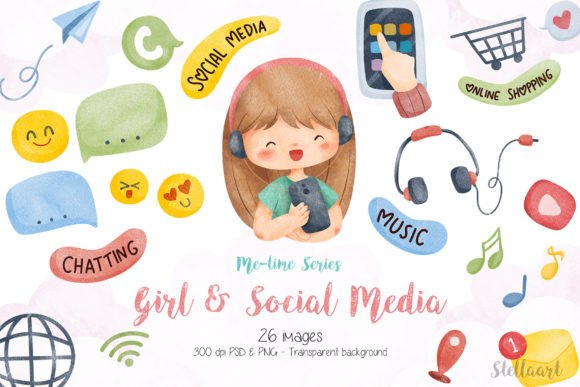
Girl and Social Media Watercolor Clipart for Embroidery
When I first opened the file for Girl and Social Media Watercolor Clipart, my immediate thought was not about stitch counts or hoop sizes, but about the specific mood this illustration conveys. As a designer who regularly bridges the gap between digital art and textile production, I look for assets that translate emotion into thread. This particular piece captures a modern, youthful aesthetic that feels current without being overly trendy. The watercolor style suggests softness and creativity, while the social media theme grounds it in contemporary culture. For those of us creating custom apparel or personalized gifts, this duality is essential. We need designs that feel artistic enough for a boutique product but relevant enough to resonate with a younger demographic or content creators.
Translating Watercolor Aesthetics to Thread
The primary challenge with any watercolor-based machine embroidery design is managing expectations regarding texture. Digital illustrations rely on transparency and color blending, whereas embroidery relies on physical layering and sheen. When evaluating Girl and Social Media Watercolor Clipart for a real project, I immediately assess how the gradient areas will behave under a needle. In my studio, I recently prepared a custom sweatshirt embroidery project for a client launching a lifestyle blog. They wanted merchandise that reflected their digital brand but felt tangible and high-end.
I found that this clipart works best when interpreted through a mix of fill stitch and satin stitch techniques. The softer edges of the watercolor effect require a running stitch outline or a specialized edge finish to prevent the design from looking blocky once stitched. If you are digitizing this yourself or purchasing a pre-digitized embroidery file based on this art, pay close attention to the transition zones. Unlike vector art, watercolor has no hard lines. To maintain that dreamy quality in a finished product, the stitch density must be varied. Too dense, and the fabric puckers; too sparse, and the fabric texture shows through, breaking the illusion of painted color. For the sweatshirt project, we opted for a lighter density fill with a textured pattern to mimic brushstrokes rather than trying to replicate the exact pixel blend, which resulted in a much more professional handmade product.
Best Applications for Creative Entrepreneurs
This design asset shines brightest when used for products that celebrate personal branding and modern femininity. Based on my testing and market observation, here are the most effective applications:
- Tote Bag Design: The vertical orientation often associated with girl-and-phone motifs fits perfectly on canvas tote bags. This is an ideal application because the stable fabric holds detail well, making it a great seller for Etsy sellers targeting students or influencers.
- Custom Apparel: Sweatshirts and oversized tees are the natural home for this aesthetic. It serves as excellent commercial embroidery inventory for shops catering to Gen Z or millennial women.
- Digital Product Previews: Even if you aren't stitching immediately, this illustration works beautifully in printable mockups for selling digital planners or social media templates, adding value to non-textile businesses.
- Personalized Gifts: For birthday or holiday embroidery projects, this theme connects instantly with recipients who are active online. It feels bespoke rather than generic.
For small shop product lines, this design offers versatility. It can stand alone as a statement piece on a chest pocket or serve as part of a larger collage on the back of a denim jacket. The key is recognizing that the "social media" element makes it inherently shareable. Customers love buying items that reflect their identity, and in 2024, that identity is often digital.
Navigating Fabric Limitations and Stabilizer Choices
While the visual appeal is high, practical execution requires caution. During my review process, I tested similar watercolor-style graphics on various substrates to see where Girl and Social Media Watercolor Clipart might fail. You must be careful with stretchy fabrics like ribbed knits or thin jersey. The complexity of watercolor shading usually demands higher stitch counts to create smooth color transitions. On unstable fabrics, this density can cause tunneling or distortion.
If you plan to use this for baby embroidery or lightweight summer tops, you absolutely must use the correct stabilizer. A cut-away stabilizer is non-negotiable for maintaining registration between the different color blocks typical of watercolor digitizing. I also advise against using this design on highly textured fabrics like terry cloth or boucle unless you add a topping. The delicate details of facial features or phone screens will get lost in the pile, ruining the recognition factor of the design.
Furthermore, consider the hoop size limitations. Watercolor effects lose their magic when shrunk down too small. If your machine only supports a 4x4 hoop, verify that the design retains clarity at that scale. Tiny lettering or intricate social media icons within the clipart may turn into thread blobs if reduced below a certain threshold. Always check the minimum recommended size before committing to a production run.
Professional Notes for Makers and Sellers
As someone who reviews design assets for both personal craft business use and commercial embroidery, I have compiled a checklist specifically for utilizing this type of illustrative art. Before you load your bobbin or list a new product, consider these factors:
- Test on Scrap Fabric First: Never assume a digital preview matches reality. Stitch out Girl and Social Media Watercolor Clipart on a scrap of the exact material you intend to sell. Check for gaps between color sections and ensure the thread colors match the intended mood.
- Evaluate Contrast: Watercolor designs often use pastel or mid-tone palettes. Test the design on both light and dark backgrounds. You may need to adjust thread colors or add a white underlay base if stitching on darker garments to prevent the background fabric from muting the design.
- Check Licensing for Commercial Use: If you are an Etsy seller or boutique owner, confirm whether your purchase includes rights for selling finished physical products versus digital files. This distinction is critical for protecting your business.
- Mockup Realistically: When creating listings, avoid flat, sterile digital overlays. Use photos of actual stitched samples or high-quality textured mockups that show how the watercolor texture interacts with fabric grain. This builds customer trust and sets accurate expectations.
- Inspect Small Details: Look closely at elements like eyes, hands, or screen interfaces. These are the first areas to suffer in translation. If the digitizing is poor, these details will look muddy. Do not hesitate to edit the embroidery file to simplify problematic areas before production.
Enhancing Brand Value Through Thoughtful Execution
Ultimately, the success of using Girl and Social Media Watercolor Clipart lies in respecting the medium. Embroidery is not just printing with thread; it is a sculptural process. When executed correctly, this design elevates a simple garment into a piece of wearable art that speaks to the intersection of digital life and handmade warmth. For creative entrepreneurs, this means higher perceived value and better buyer engagement.
I have seen too many makers ruin beautiful illustrations by rushing the digitizing or ignoring fabric physics. Take the time to understand the interplay between the watercolor aesthetic and stitch mechanics. Whether you are creating a personalized gift for a friend or stocking your shop for the holiday season, treating this design with technical respect ensures the final result honors both the original artist's vision and your own craftsmanship. The goal is always a finished product that looks intentional, professional, and distinctly human, even when depicting our digital lives.